
If you’re looking for a 4G car camera for street parking, you’re likely dealing with a situation where your car is left outside overnight — without WiFi, without supervision, and often in unpredictable environments.
Street parking is very different from driveway or garage parking. You’re exposed to passing traffic, pedestrians, random incidents, and situations where you won’t know anything happened until it’s too late.
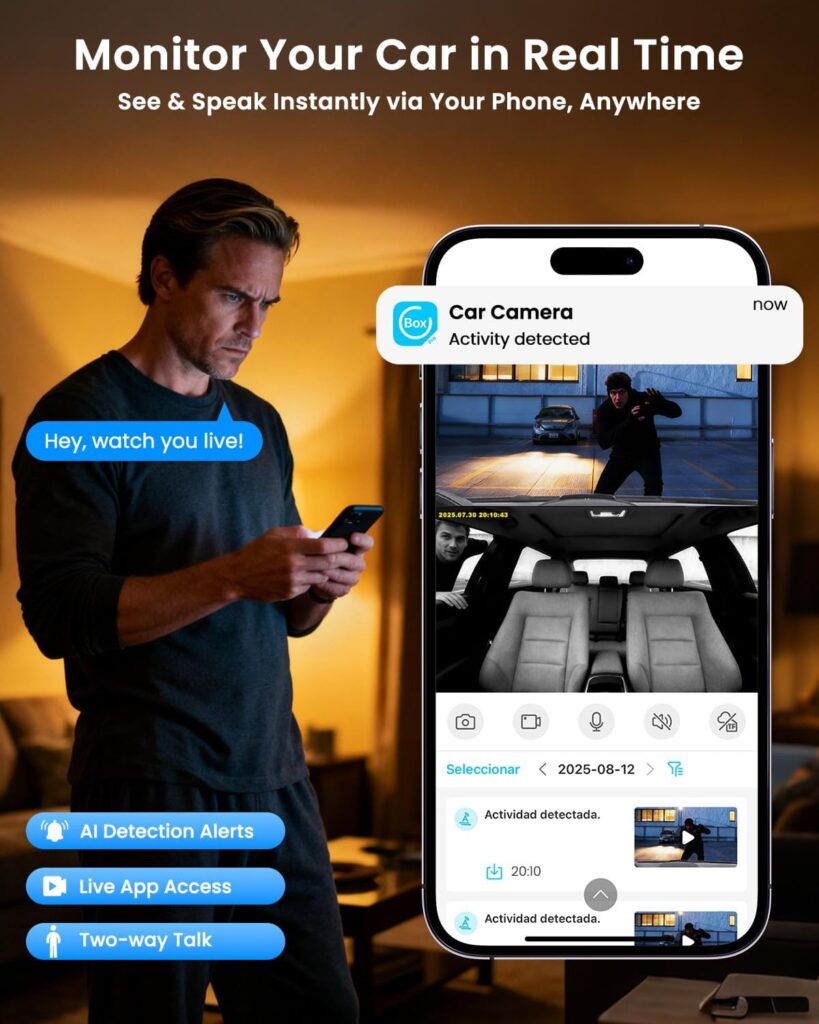
Monitoring your car remotely while parked on the street overnight
Most people assume that installing any dash cam or security camera is enough.
But in real-world testing, this is exactly where most setups fail.
What actually happens with most cameras:
- No alerts when someone approaches your car
- No remote access when you’re away
- Footage exists — but only after the damage is done
The issue isn’t that cameras don’t work.
It’s that most cameras aren’t designed for street parking — where there is no WiFi, no proximity, and no second chance to respond.
Street parking creates a completely different environment compared to parking in a driveway or garage.
And this difference is exactly why most camera setups fail in real-world situations.
Why Street Parking Is Much Harder to Monitor
- No stable WiFi connection: your car is often far from your home network or completely outside coverage
- No physical visibility: you can’t see or hear what’s happening to your car in real time
- Unpredictable activity: pedestrians, traffic, and random incidents increase the risk of damage or theft
- Long unattended periods: your car may be left overnight or even longer without any supervision
In other words, street parking removes the two things most cameras rely on: connection and proximity.
This is why many setups that work perfectly at home suddenly become unreliable.
Street parking isn’t just a different location — it’s a completely different problem.
After testing different setups for a 4G car camera for street parking, one pattern became very clear:
Most cameras don’t fail because they’re low quality — they fail because they lose connection.
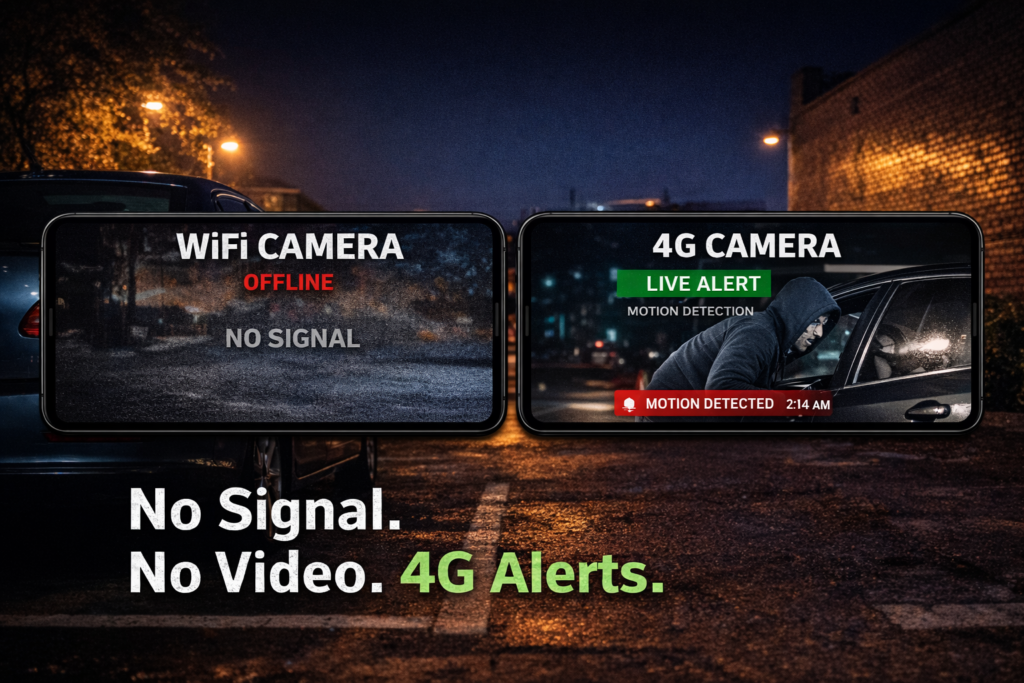
Same situation — completely different results
In real street parking scenarios, this difference is not small — it determines whether your camera is actually useful.
A camera that records footage but doesn’t alert you in real time cannot prevent damage, theft, or suspicious activity.
Most people think they need a better camera.
But for street parking, the real requirement is simple: a camera that never loses connection.
Once you understand why most cameras fail in street parking, the solution becomes much clearer.
It’s not about choosing the most expensive camera — it’s about choosing a setup that actually works in this environment.
Option 1: 4G Car Camera (Best for Reliable Street Parking Monitoring)
This is the only setup that consistently works when your car is parked on the street overnight or for long periods.
- Uses a SIM card instead of WiFi → stays connected anywhere
- Sends real-time motion alerts directly to your phone
- Allows live viewing even when you are far away
- Works continuously with proper power setup
Option 2: Portable 4G Camera (Best for Flexibility & Short-Term Use)
Portable cameras can still be useful in certain situations, especially if you need something temporary or easy to move.
- No installation required — place it anywhere inside the car
- More discreet than traditional dash cams
- Works well for short-term monitoring
- Still provides remote alerts via 4G connection
If you want flexibility, a portable camera can work.
But if you want real protection in street parking — a 4G car camera is the only reliable option.
To ensure our recommendations are trustworthy, we conducted multiple nights of real-world testing with both 4G dash cams and portable 4G cameras.
These tests included different parking scenarios: street parking, open lots, apartment garages, and low-light conditions.
Key Observations from Real-World Testing:
- Connectivity Reliability: 4G cameras maintained uninterrupted connection in low-signal areas; WiFi cameras failed within minutes.
- Motion Alerts Accuracy: Real-time notifications were consistently triggered for 4G cameras; portable cameras sometimes delayed alerts by 15–30 seconds.
- Remote Live Access: Only 4G dash cams allowed instant live viewing from a phone while the car was unattended; portable cameras required repositioning for optimal view.
- Power Behavior: Wired 4G dash cams used car power but stayed fully functional overnight; portable 4G cameras ran on internal battery and needed daily recharge for continuous use.
- Video Usability: Both cameras recorded in 1080p, but dash cams captured license plates and faces more reliably thanks to optimal placement and stable connectivity.
These real-world observations highlight why a 4G dash cam is the most reliable solution for overnight street parking.
Portable 4G cameras are useful for flexibility, but only dash cams guarantee continuous, real-time monitoring.
Learn more about detailed comparisons and why connection matters: 4G vs WiFi Security Cameras for Cars
After testing multiple setups, it’s clear: the right camera makes all the difference for overnight street parking.
A WiFi camera or standard dash cam may record footage, but it won’t alert you in real time. Only a 4G dash cam guarantees uninterrupted monitoring.
Key takeaways from real-world testing:
- 4G dash cams maintain connection anywhere, anytime
- Real-time motion alerts keep you informed instantly
- Live viewing allows you to monitor your car remotely
- Portable 4G cameras offer flexibility but limited overnight reliability
Protect your car tonight with a camera that actually works.
👉 See the Best 4G Dash Cams for Street ParkingReal-world tested options, reliable connectivity, instant alerts
For a deeper understanding of why 4G cameras outperform WiFi setups: Read the full comparison here .
Want to understand how 4G cameras outperform WiFi setups in real-world street parking?
Disclosure: As an Amazon Associate, we earn from qualifying purchases. This comes at no extra cost to you. We only recommend products based on real use cases, research, and user feedback.
Pingback: Best Security Camera for Airbnb Hosts Without WiFi — Real-World Tested Solutions for Remote Monitoring [2026